Last reviewed: September 22, 2026
Affiliate disclosure (please read): Links on this page go to official manufacturer or major-retailer product pages. If you buy through them, we may earn a commission at no extra cost to you. We have not lab-tested any of these systems — this comparison is built from manufacturer-published specs and operating requirements, documented test standards for the underlying technologies, and patterns across verified buyer reviews. Commissions never change our verdicts.
How we evaluate: The comparison below is based on how the two technologies actually work (ion exchange vs. template-assisted crystallization), manufacturer-published specs and operating requirements, and patterns across verified buyer reviews. We haven’t lab-tested these systems ourselves — but the chemistry here is well established, and we’ll tell you exactly where marketing ends and physics begins.
The one-paragraph answer
A salt-based water softener (ion exchange) removes hardness minerals from your water. It’s the only residential technology that produces genuinely soft water. A salt-free water conditioner (usually TAC — template-assisted crystallization) neutralizes hardness minerals so they can’t form scale, but leaves them in the water. They solve different problems. If you want the soft-water feel — lathering soap, spot-free dishes, softer laundry — you need salt (or potassium). If your enemy is scale buildup in the water heater and on fixtures, and you’d rather never touch a salt bag, a conditioner is a legitimate answer. Anyone implying a “salt-free softener” produces actual soft water is selling you a conditioner with a softener’s name on it.
How each technology actually works
Salt-based softening: ion exchange. Hard water flows through a tank of resin beads charged with sodium (or potassium) ions. Calcium and magnesium — the hardness minerals — stick to the resin, and sodium goes into the water in their place. When the resin is saturated, the system regenerates: it flushes the resin with brine (salty water), which recharges the beads and washes the hardness down the drain. Decades-old, thoroughly understood chemistry. The gold standard for hardness removal.
What it requires: regular salt purchases, a drain line for the brine discharge, electricity for the control valve, and water per regeneration cycle.
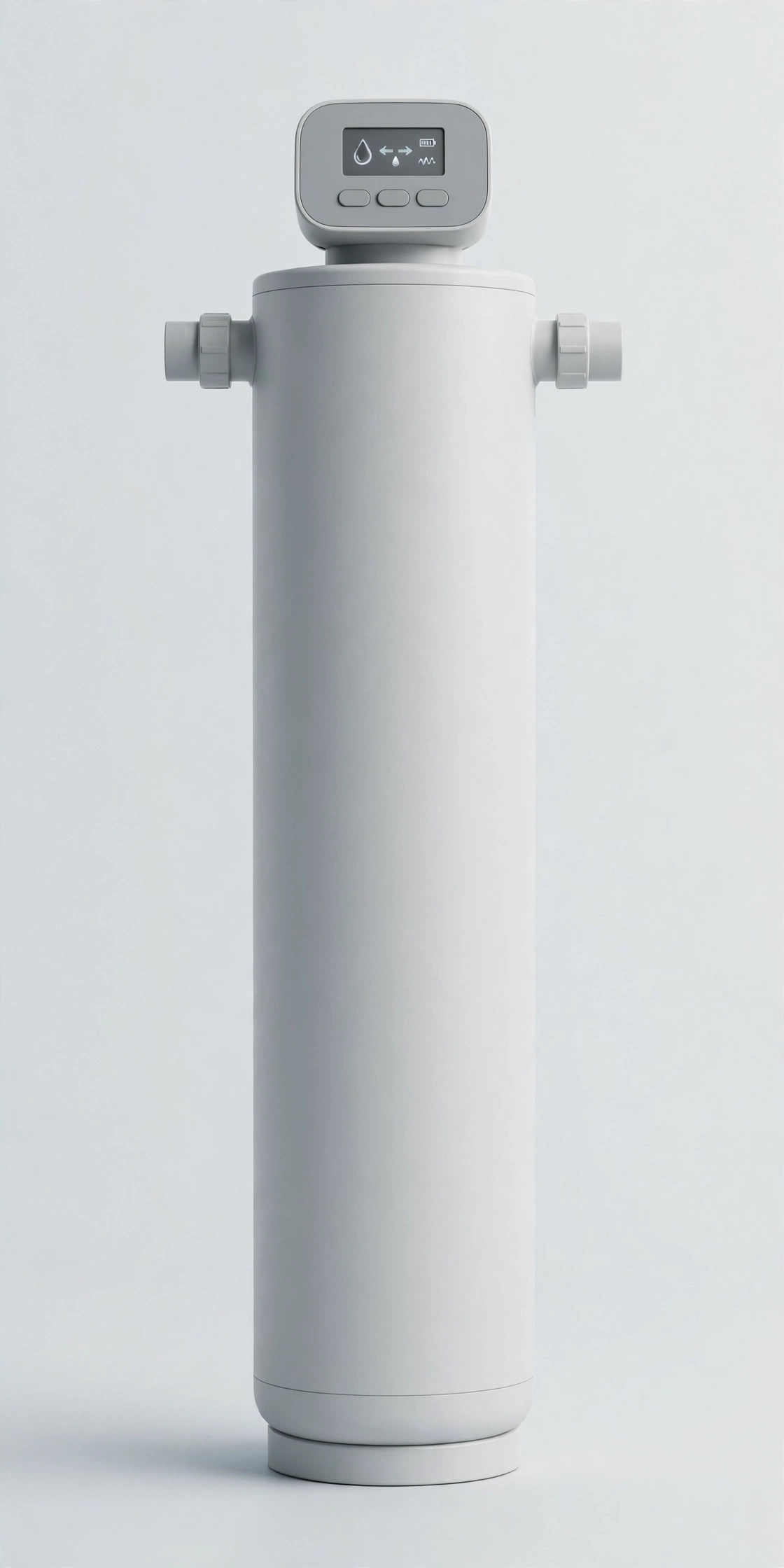
Salt-free conditioning: TAC (template-assisted crystallization). Hard water flows over microscopic polymer beads whose surfaces act as nucleation sites. In crystallization science, a “template” is simply a surface feature that makes it easier for a crystal to start forming. Dissolved calcium and magnesium form tiny, stable micro-crystals that stay suspended in the water instead of sticking to surfaces as scale. The minerals are still in your water; they’ve been converted into a form that doesn’t adhere. No salt, no regeneration, no drain line, no electricity, no wastewater. Performance in this category is measured by established third-party scale-reduction test protocols (Germany’s DVGW W512 is the best-known). The mechanism itself is the same one behind biomineralization — how bones grow.
What it requires: basically nothing ongoing. The TAC media has a rated service life (roughly 5–10 years depending on the brand; see the cost section) and then gets replaced.
A third category worth knowing: polyphosphate feeders. These inject food-grade polyphosphates that sequester hardness minerals, inhibiting scale. Cheap and compact, but best suited to light-duty or point-of-use applications. They’re not a whole-house scale solution in the way TAC is, and they add phosphate to the water. We mention them for completeness; they’re not the focus of this comparison.
Head-to-head: the full comparison
| Salt-based softener | Salt-free conditioner (TAC) | |
|---|---|---|
| Mechanism | Ion exchange — swaps hardness for sodium/potassium | Crystallization — converts hardness into non-adhering crystals |
| Removes hardness minerals? | Yes | No — minerals stay in the water |
| Prevents scale buildup? | Yes | Yes |
| Soft-water feel (lather, no spots)? | Yes | No |
| Salt required | Yes — ongoing purchases | None |
| Drain line required | Yes | No |
| Electricity required | Yes | No |
| Water used in operation | Yes — roughly 25–65 gallons per regeneration | None |
| Adds sodium to water | Yes — roughly 7.5 mg/L per GPG of hardness removed | No — minerals unchanged |
| Typical upfront cost | Roughly $600–$1,500 for mainstream standalone models (premium lines run higher) | Roughly $800–$2,000 for quality standalone units (brand- and size-dependent) |
| Ongoing cost | Salt (roughly $50–$150/yr for most households) + water/electricity | Media replacement every ~5–10 years (brand-dependent; e.g., Kind’s eSoft cartridge runs ~$800) |
| Maintenance effort | Add salt regularly; check settings | Nearly none until media replacement |
| Best for | Hard/very hard water; anyone who wants truly soft water | Moderate hardness; scale prevention without the salt lifestyle |
Prices and ranges are observations from Sep 2026 listings — re-check before buying; brands run frequent promotions.
Round 1: Effectiveness — what each one actually fixes
This is the round that decides most purchases, so let’s be blunt.
Ion exchange is the only technology here that changes your water’s hardness number. Lab test says 15 GPG going in, a properly sized softener delivers ~0 GPG coming out. Soap lathers, glassware comes out clean, skin feels different after a shower, laundry is softer. This is what “soft water” means. Nothing salt-free replicates it.
TAC conditioning doesn’t change the hardness number at all. 15 GPG in, 15 GPG out. What changes is behavior: the crystallized minerals don’t form scale on heating elements, fixtures, and pipes. Your water heater is protected. Your showerhead doesn’t clog. But your soap still behaves like hard-water soap, and you’ll still see some spotting.
Edge: Salt-based, and it’s not close if what you want is soft water. If what you want is scale protection, call it a draw.
Round 2: Ownership cost over 10 years
Salt-based systems can look cheaper on the sticker: mainstream standalone softeners often land in the $600–$1,500 range, versus roughly $800–$2,000 for a quality standalone TAC conditioner (premium softener lines like SpringWell’s SS run higher — see the product options below). But the softener has a forever tail: salt at roughly $50–$150/year for a typical household (a 40-lb bag runs ~$9–$19 at retail and most households go through roughly one a month), plus the water and electricity for regeneration. Over a decade, that’s $500–$1,500 in salt alone — which can erase the upfront advantage entirely.
TAC’s ongoing cost is the media replacement every ~5–10 years depending on the brand. Infrequent, but not free. For reference: Kind rates its eSoft TAC cartridge at roughly 5 years, and the replacement cartridge has been observed around $800; Aquasana rates its Salt-Free Water Conditioner media for up to 10 years or 1,000,000 gallons; SpringWell states 5+ years for its FutureSoft media. Exact replacement costs vary — check the current price for your model.
Edge: Roughly even over a decade. Run the numbers for your specific models and local salt prices.
Round 3: Maintenance and hassle
No contest. A salt-based softener needs you to buy salt, haul 40-pound bags, keep the brine tank filled, and occasionally check settings. Forever. A TAC conditioner needs nothing until the media’s service life ends, years later.
Edge: Salt-free, by a wide margin. This is the #1 reason people choose conditioners, and it’s a completely valid reason.
Round 4: Installation requirements
Salt-based softeners need three things near the install point: the main water line, a drain line for brine discharge, and an electrical outlet. If your utility area lacks a nearby drain, the install gets more complicated (and more expensive).
TAC conditioners need one thing: the water line. No drain, no outlet, no wastewater.
Edge: Salt-free. Simpler install, fewer constraints.
Round 5: Environmental and regulatory considerations
Regeneration discharges salty brine into wastewater. In most places this is a non-issue. But some communities (particularly in water-scarce regions of the West) restrict or ban new salt-based softeners because of the salt load on wastewater treatment and groundwater. In California, a 2005 state law (AB 1366) explicitly lets local agencies prohibit them by ordinance, and several Southern California communities (Santa Clarita, Dixon, and others) have done so; parts of Texas, Arizona, Michigan, and New Mexico have also seen local restrictions. Note that some local rules cover potassium-based softeners too. Check your local regulations before buying a salt-based system. This is a real constraint in some areas, not a hypothetical.
TAC conditioners discharge nothing and use no water in operation, so they sidestep the issue entirely.
Edge: Salt-free, with the caveat that most buyers will never face a restriction.
Round 6: Drinking water and health
Softened water contains added sodium. The rule of thumb cited across the industry is about 7.5 mg/L of sodium added for each grain per gallon of hardness removed. At 10 GPG, that’s roughly 75 mg/L, or about 18 mg in an 8-oz glass. Compare ~160 mg in a single slice of white bread. For most people this is nutritionally small next to dietary sodium. The exceptions worth taking seriously: anyone on a sodium-restricted diet should check with their doctor, and many such households use potassium chloride as the regenerant instead (it costs several times more per bag and is slightly less efficient per pound, so you’ll use more of it). Some families also route a hard-water line to the kitchen cold tap for drinking and cooking, softening only the rest of the house. A common and sensible compromise.
TAC-conditioned water is chemically unchanged except for the crystal structure of the minerals. Nothing added, nothing removed.
One caution that applies to both: neither technology makes water safe. Softeners and conditioners don’t remove bacteria, lead, nitrates, arsenic, or PFAS. If you have safety concerns, you need testing and targeted treatment (filtration, UV, reverse osmosis) — see our Best Whole House Water Filters guide.
Edge: Salt-free on simplicity; salt-based is fine for most households with the standard caveats above.
Who should buy which
Pros
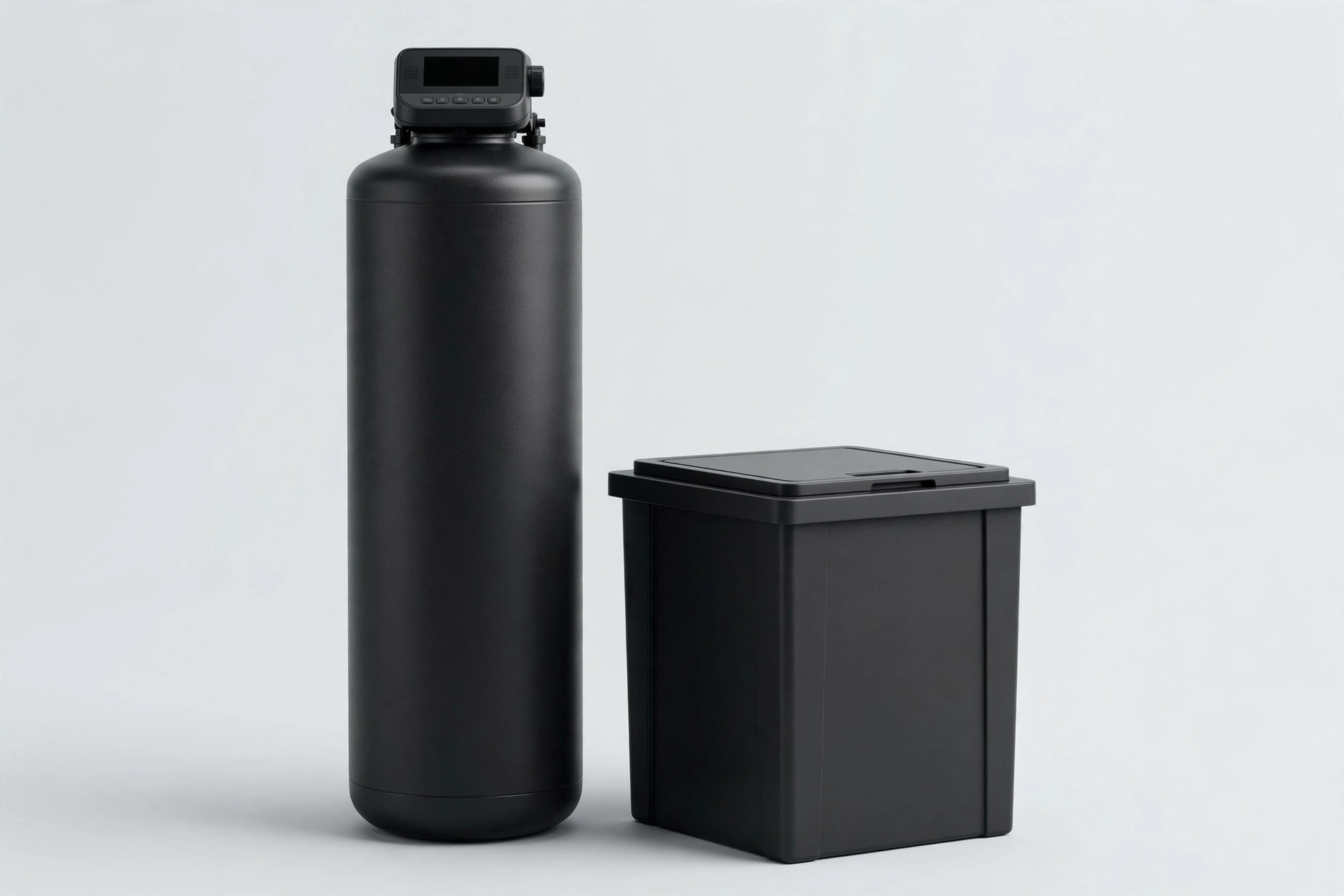
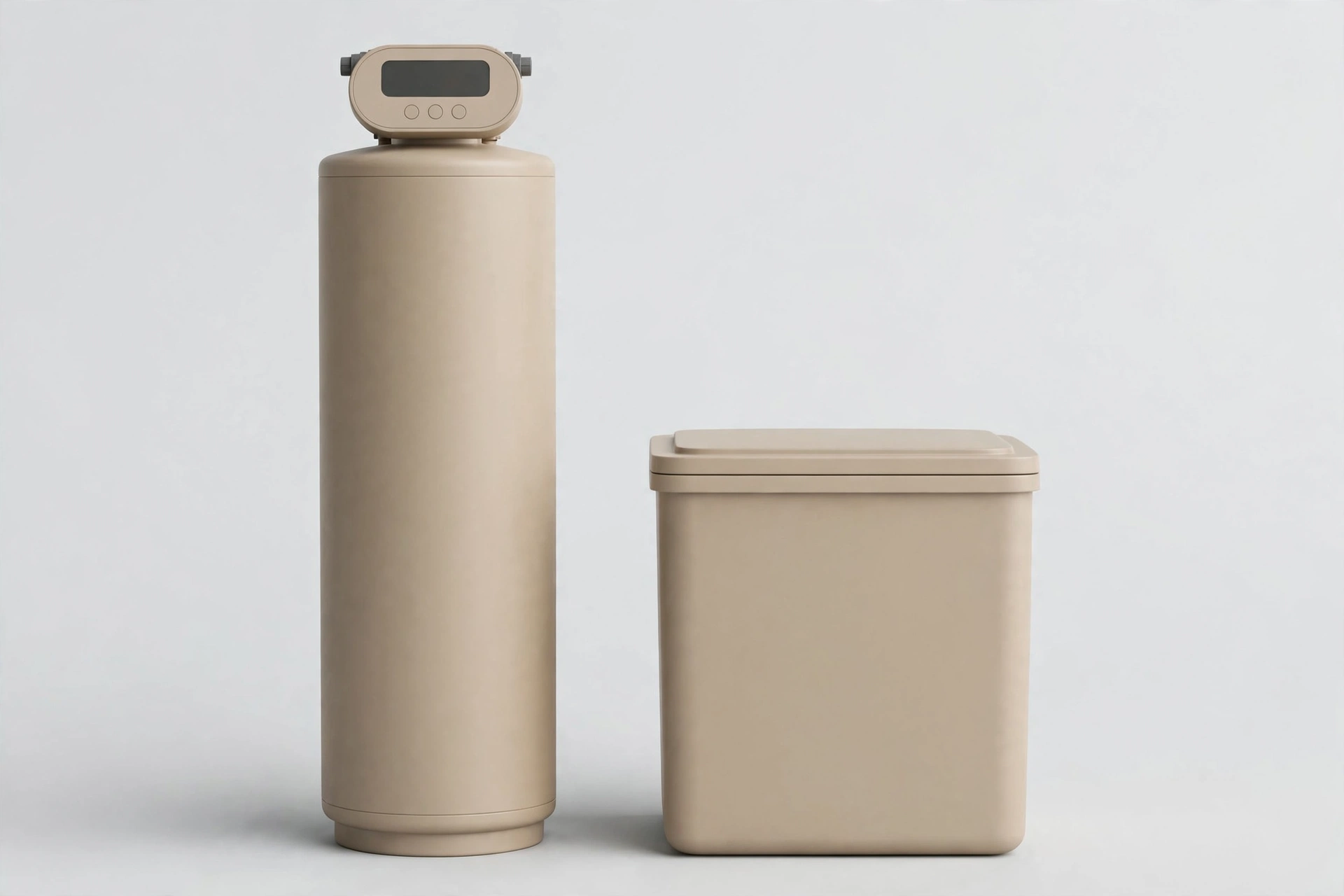
- Your hardness is high (10+ GPG), you want genuinely soft water — the lather, the feel, the spot-free results — and you’re fine with salt purchases, a drain line, and regeneration cycles. Check local discharge regulations first.
Cons
- Your hardness is moderate and scale is the only complaint. You’re signing up for chores you don’t need.
Representative options: a US Water Systems salt-based softener + filter bundle (the Bodyguard line is listed from $2,399 as of Sep 21, 2026), or a SpringWell SS-series softener (priced by configuration; third-party listings observed around $1,530+ in Sep 2026).
Pros
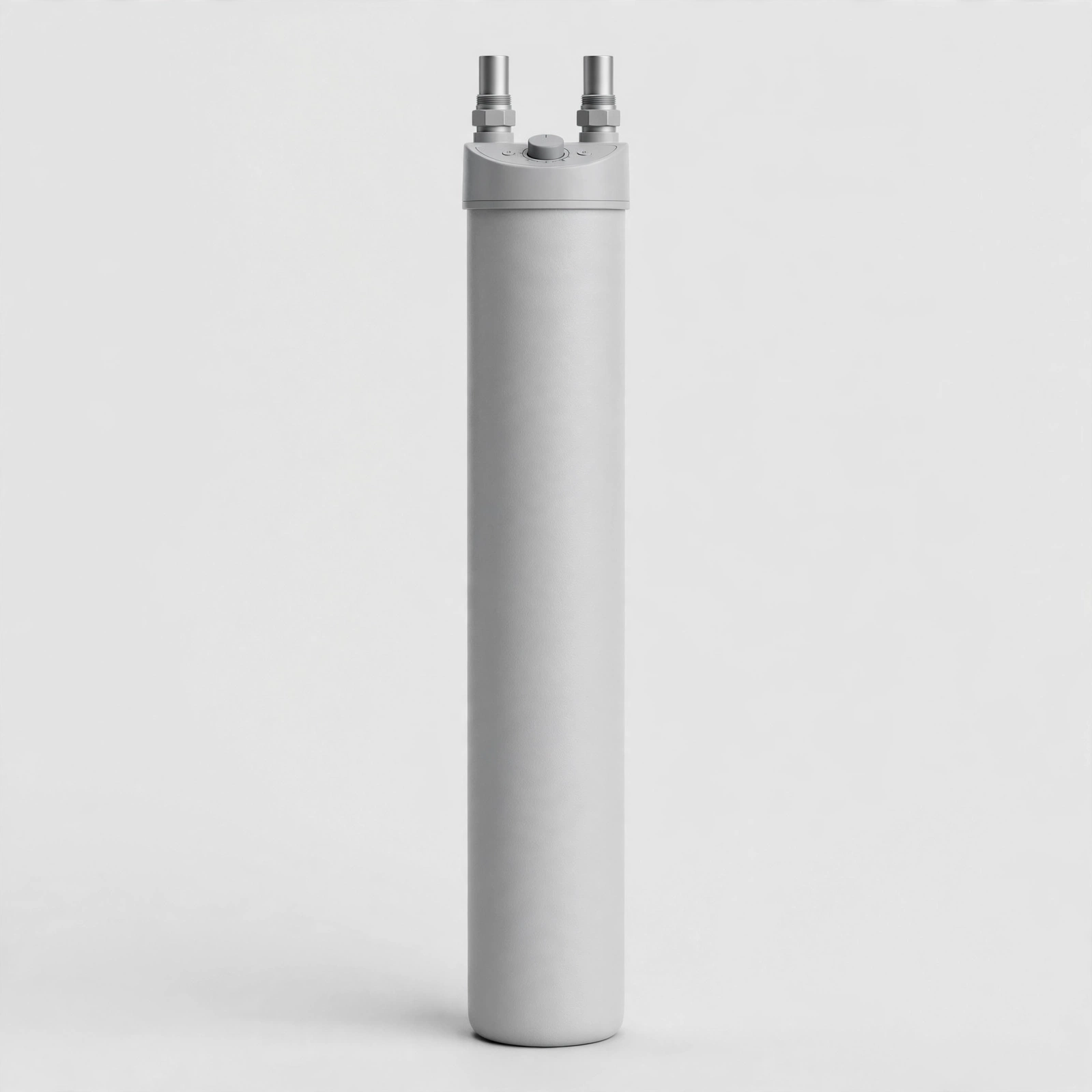
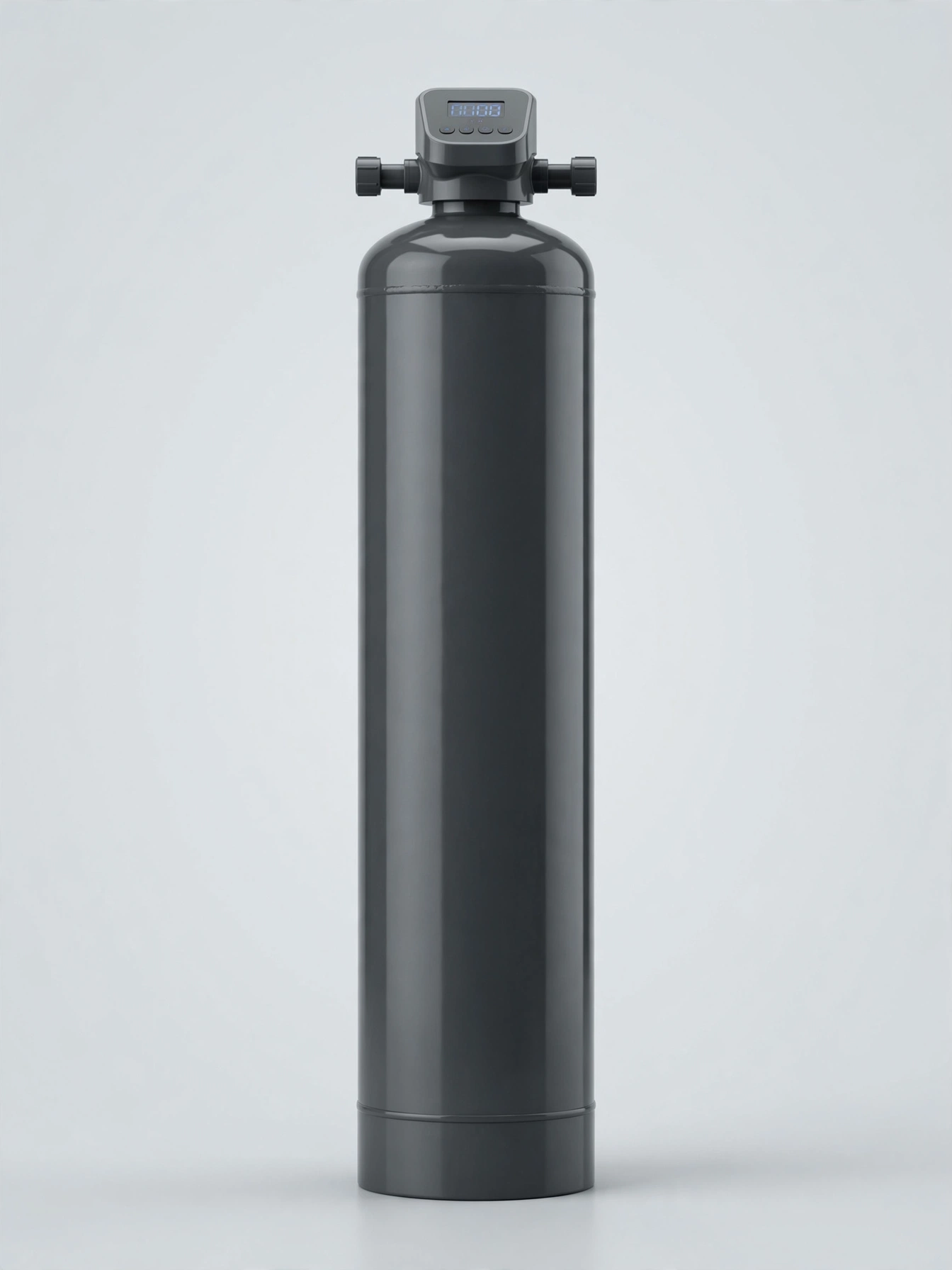
- Your hardness is moderate (under ~10 GPG as a practical rule of thumb), scale buildup is your main enemy rather than water feel, you want near-zero maintenance, or local regulations restrict salt softeners.
Cons
- What you actually want is soft-feeling water. No conditioner delivers that.
Representative options: the Kind E-2000 conditioner — no filtration stage, the filtration-free sibling of the E-3000; 15 GPM, rated 1–5 bathrooms, 75 GPG max hardness (manufacturer specs); third-party listings observed around $1,074–$1,353 in Sep 2026, Kind’s pricing shifts often so check the current price. Also: the SpringWell FutureSoft (priced by configuration; third-party listings observed ~$1,597+), the Aquasana Rhino Salt-Free Water Conditioner (SCM media; Aquasana doesn’t publish a clean standalone price on its site, so check the current price), and the Pelican NaturSoft NS3/NS6 (sold through dealers; pricing not published by Pentair — dealer listings observed roughly $1,630–$1,980 in Sep 2026).
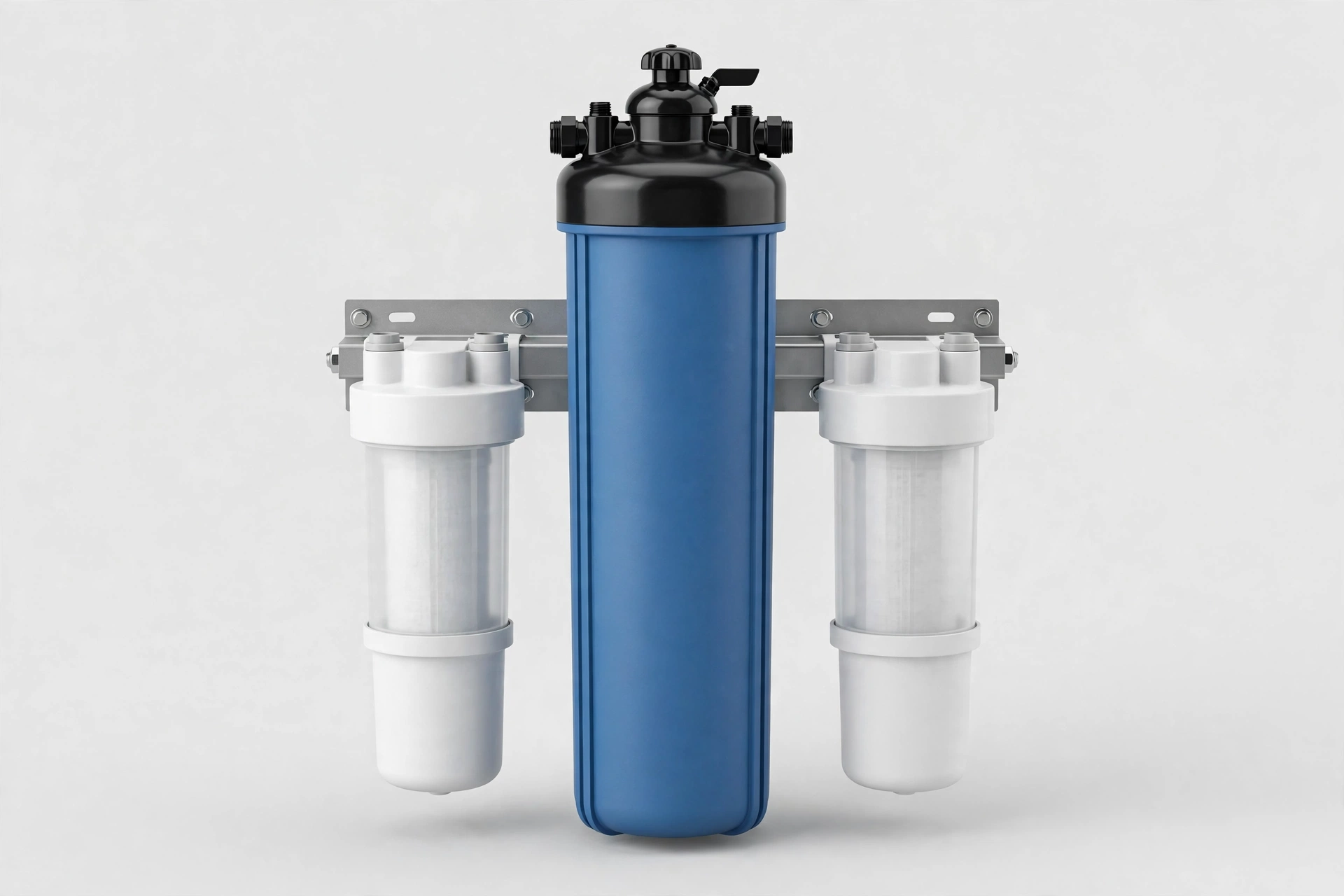
Don’t buy the wrong Aquasana: Aquasana’s current “SimplySoft” line (WH-SF40) is a salt-based softener, not a salt-free conditioner — its legacy salt-free EQ-SS20 is discontinued. If you want salt-free from Aquasana, you want the Rhino Salt-Free Water Conditioner above.
Buy both (a combo system) if: you’re on city water with hardness and chlorine — which describes a huge share of hard-water households. A softener or conditioner alone won’t fix taste and odor; a carbon filter alone won’t fix hardness. The Kind E-3000 (~$1,885 observed on kindwater.com as of Sep 21, 2026 — Kind’s pricing shifts frequently, check the current price; 15 GPM) bundles filtration with TAC conditioning in one box; US Water Systems builds salt-based softener + carbon filter bundles for the full soft-water version (Bodyguard line from $2,399 as of Sep 21, 2026). See our hard-water roundup for the detailed picks.
Buy neither yet if: you haven’t tested your water. A $30–$50 lab test (or a $10 home kit for a rough hardness number) tells you whether you’re solving a 5-GPG nuisance or a 20-GPG problem — and the right equipment is completely different.
The “salt-free softener” language warning
You’ll see products marketed as “salt-free water softeners.” Treat the phrase as a category label, not a technical claim. No salt-free system produces genuinely soft water, and even reputable brands use the term (Kind’s own product title says “salt-free water softener”). The honest ones tell you exactly what their TAC units do anyway: Aquasana calls its product a “Salt-Free Water Conditioner,” and its own FAQ states the system “will NOT reduce” hardness or TDS; SpringWell’s own page calls salt-free “best for scale control” and admits it “won’t make water feel slick or stop spotting the way salt does.”
The test is simple: ignore the label and look at the mechanism. If it doesn’t use ion exchange, it doesn’t soften. If the minerals stay in the water, the water isn’t soft. Treat any brand that blurs that line — implying its TAC unit removes hardness or produces soft water — as a mark against its honesty, not a feature.
Frequently asked questions
Can a salt-free conditioner protect my water heater from scale?
That’s exactly what TAC is designed for: converting hardness into non-adhering crystals protects heating elements and plumbing from scale buildup. It’s the legitimate core use case. What it won’t do is make the water feel soft.
Will my dishes still spot with a conditioner?
Mostly, yes. Spotting comes from minerals left behind when water evaporates, and conditioners leave the minerals in the water. Aquasana’s own FAQ admits harmless calcium spots can still appear where water sits and evaporates. Reduced, perhaps; eliminated, no. Spot-free dishes require actual softening (or a rinse aid doing the cosmetic work).
Do salt-based softeners waste a lot of water?
Modern metered softeners regenerate based on actual water use rather than a timer, which cut waste substantially versus old clock-based units. Expect roughly 25–65 gallons per regeneration, typically every few days to weekly for a normal household. Measurable, but small next to total household usage.
Can I switch from salt to potassium chloride later?
Yes — potassium chloride works as a regenerant in standard ion-exchange softeners. It costs several times more per bag than sodium chloride (third-party listings typically put it at roughly 2–5×) and is slightly less efficient per pound, so manufacturers generally recommend using ~10–30% more of it (or raising the hardness setting ~10–20%). It’s the standard answer for sodium-restricted households — but check with your doctor about potassium intake too, and note that some local discharge bans cover potassium-based softeners as well.
How do I know my hardness number?
A home test kit (~$10) gives a rough GPG reading in minutes; a state-certified lab test ($30–$50) gives you hardness plus the full panel (iron, pH, TDS) that well-water buyers need anyway. If you’re on city water, your utility’s annual water quality report sometimes includes hardness — free, but not always current.
The verdict
Buy the technology that matches the problem you actually have. High hardness or you want the soft-water feel: salt-based ion exchange. It’s the only thing that removes hardness, and the salt-and-drain chores are the price of genuinely soft water. Moderate hardness and scale is the enemy: a TAC salt-free conditioner. Near-zero maintenance, no salt, no drain, honest scale protection. Chlorinated city water plus hardness: a combo system, because neither technology filters chemicals. And whatever you buy, test first. A $50 lab report is the cheapest part of this project and the one that prevents the most expensive mistakes.