Last reviewed: September 22, 2026
Disclosure (read this first): PureWholeHouse is reader-supported. This guide does not contain affiliate links yet — every product link is a plain link to the manufacturer’s own page or a major retailer’s page, and we earn nothing if you click one. When our affiliate partnerships go live, we’ll label affiliate links clearly. Commissions never change our rankings or verdicts.
All prices were observed in September 2026 and change often — always check the live price on the linked page before buying.
How we evaluate: We don’t own a test lab, so we won’t pretend we plumbed four hard-water systems into one house. Our picks are based on manufacturer-published specs, the hardness-removal mechanism each system uses (ion exchange vs. TAC/SCM conditioning — these are not interchangeable), warranty and maintenance terms, and patterns across verified buyer reviews. Where we cite performance data, we say whose it is. Claims like “prevents 95% of scale” are the manufacturer’s — we attribute them as such.
Here’s the thing most hard-water articles bury until paragraph twelve: “hard water” is two different problems, and they need different equipment.
Problem 1: Scale buildup. Dissolved calcium and magnesium precipitate out as limescale inside your water heater, on fixtures, and in pipes. Scale makes water heaters work harder and die younger, clogs showerheads, and leaves crusty white deposits everywhere.
Problem 2: The feel of the water. Soap that won’t lather, spots on glassware, stiff laundry, dry itchy skin after a shower. This is what people actually notice day to day. And it only goes away when hardness minerals are removed from the water, not just neutralized.
Why this matters: salt-free “conditioners” solve Problem 1 but not Problem 2. Salt-based softeners solve both. Any article (or salesperson) that treats them as interchangeable is either confused or selling you something. We’ll be precise about which is which below. (Aquasana is explicit about this on its own product descriptions: its salt-free conditioner “does not soften water or remove minerals that cause hardness.”)
Before anything else: test your water. You need your hardness number in grains per gallon (GPG) — a home test kit (~$10–$25) or a lab test will give it to you. The standard scale (based on U.S. Geological Survey figures, the version most of the industry uses): 0–3.5 GPG is soft, 3.6–7.0 is moderately hard, 7.1–10.5 is hard, and above 10.5 is very hard. (You’ll often see these rounded to 0–3 / 3–7 / 7–10 / 10+.) Everything below assumes you know your number. Also know whether you’re on city or well water — most city-water homes with hard water also have chlorine to deal with, which changes the equipment.
Our top picks at a glance
- Best filter + salt-free combo (city water): Kind E-3000 — filtration plus TAC scale conditioning in one box, ~$1,885, 15 GPM
- Best for genuinely soft water: US Water Systems Matrixx filtration + salt-softener combo — ion exchange actually removes hardness, $2,399–$3,295 by size
- Best salt-free conditioner pairing: SpringWell CF1 + FutureSoft — top-rated carbon filtration with TAC conditioning added on, ~$2,900–$3,100 combined (directional pricing)
- Best mainstream bundle: Aquasana Rhino EQ-1000 + Rhino Salt-Free Water Conditioner — the best-known brand’s one-box answer, ~$2,800 combined (conditioner price unverified on aquasana.com)
1. Kind E-3000 — Best filter + salt-free combo
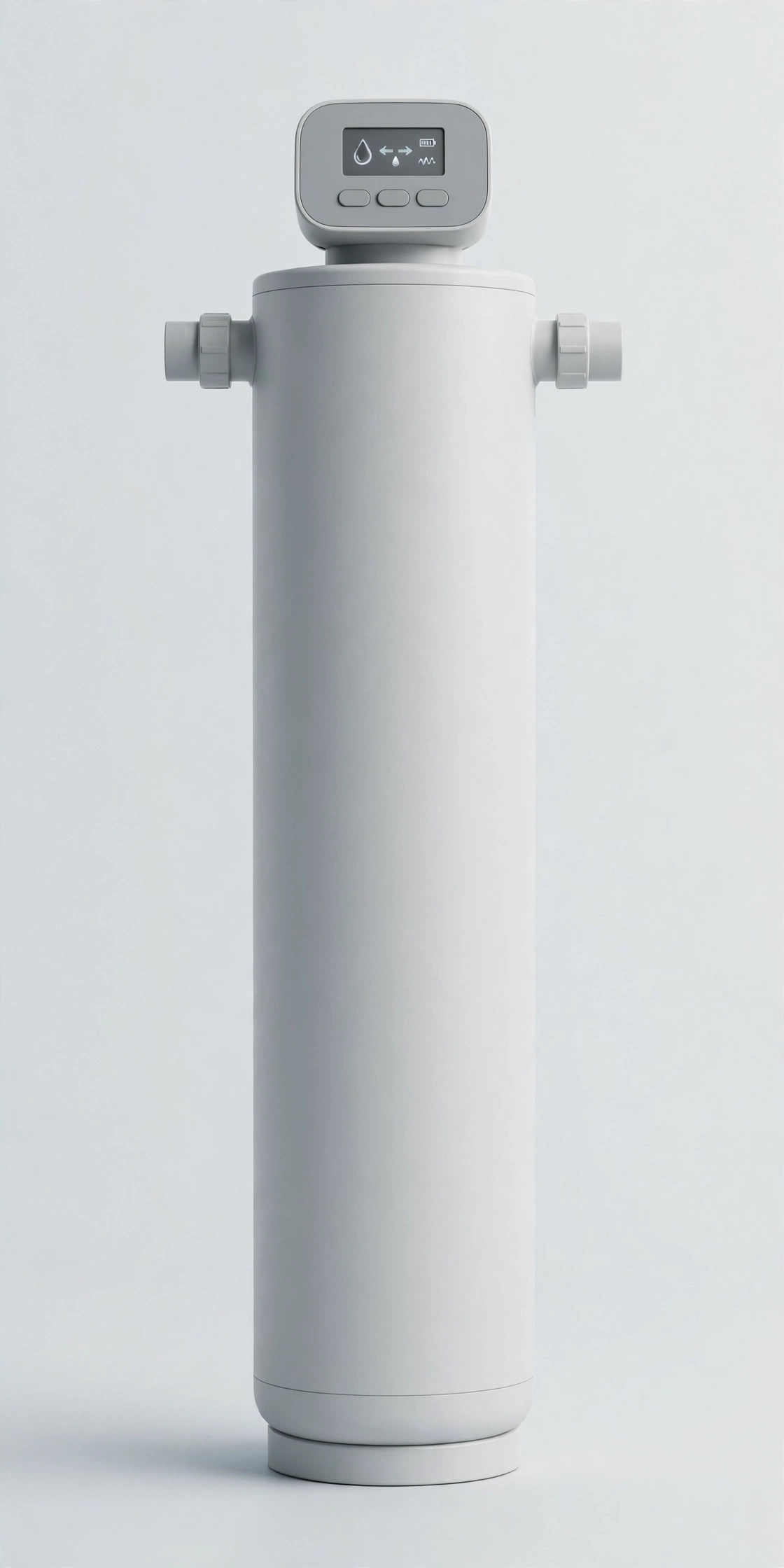
Price: ~$1,885 (observed September 2026 on kindwater.com — Kind reprices frequently) — Check current price
Flow rate: 15 GPM
Design: Tankless three-stage cartridge stack — sediment → carbon block → eSoft TAC conditioning; sized for 1–5 bathrooms per Kind’s current specs
What it does about hardness: TAC conditioning — transforms hardness minerals into crystals that can’t bond as scale. Does not remove them.
Warranty: Limited lifetime on tanks + 120-day satisfaction guarantee
Standout: No salt, no electricity, no drain line, zero water waste, compact wall-mount install
Verdict: The cleanest one-box answer for city water that is hard and chlorinated. Real filtration plus scale protection, none of the salt-softener chores. But be clear-eyed: your water will not feel soft.
The E-3000 exists for the buyer with two complaints (chlorine taste/odor and hard-water scale) who wants one purchase, one install, no salt bags, no drain line, no wastewater. The TAC (template-assisted crystallization) stage is the honest version of “salt-free”: it changes the structure of hardness minerals so they can’t adhere as scale, without removing them from the water. Kind claims 88% scale reduction (its own testing, not an independent certification).
The honest drawbacks, stated plainly: TAC is not softening. You’ll still get some spotting, soap will still lather the way hard water lathers, and if what you actually want is that slippery soft-water shower feel, this won’t deliver it. The cartridge design also means real ongoing costs. Price the replacements before buying. Kind quotes “~$100/yr” for routine sediment and carbon filter swaps (every 6–12 months; the replacement filter set lists around $124 on Kind’s site). But the eSoft TAC cartridge is the big-ticket item: listed at $799.99 on sale (was $999.99), lasting roughly 5 years per Kind’s own Q&A. It was marked sold out when we checked. A realistic 10-year maintenance bill is around $2,600, not the ~$1,000 the headline figure implies.
One certification note: Kind lists NSF/ANSI 42, 61, and 372 certifications on its site, but third-party analysis notes these are component-level certifications, not a finished-system certification. Present-tense, per the manufacturer. We didn’t pull the certification-body records ourselves.
Pros
- You’re on city water, your hardness is moderate (under ~10 GPG), your main enemy is scale buildup rather than water feel, and you refuse to deal with salt, drain lines, and regeneration cycles.
Cons
- You want the soft-water feel. Nothing salt-free delivers it.
2. US Water Systems Matrixx filtration + salt-softener combo — Best for genuinely soft water
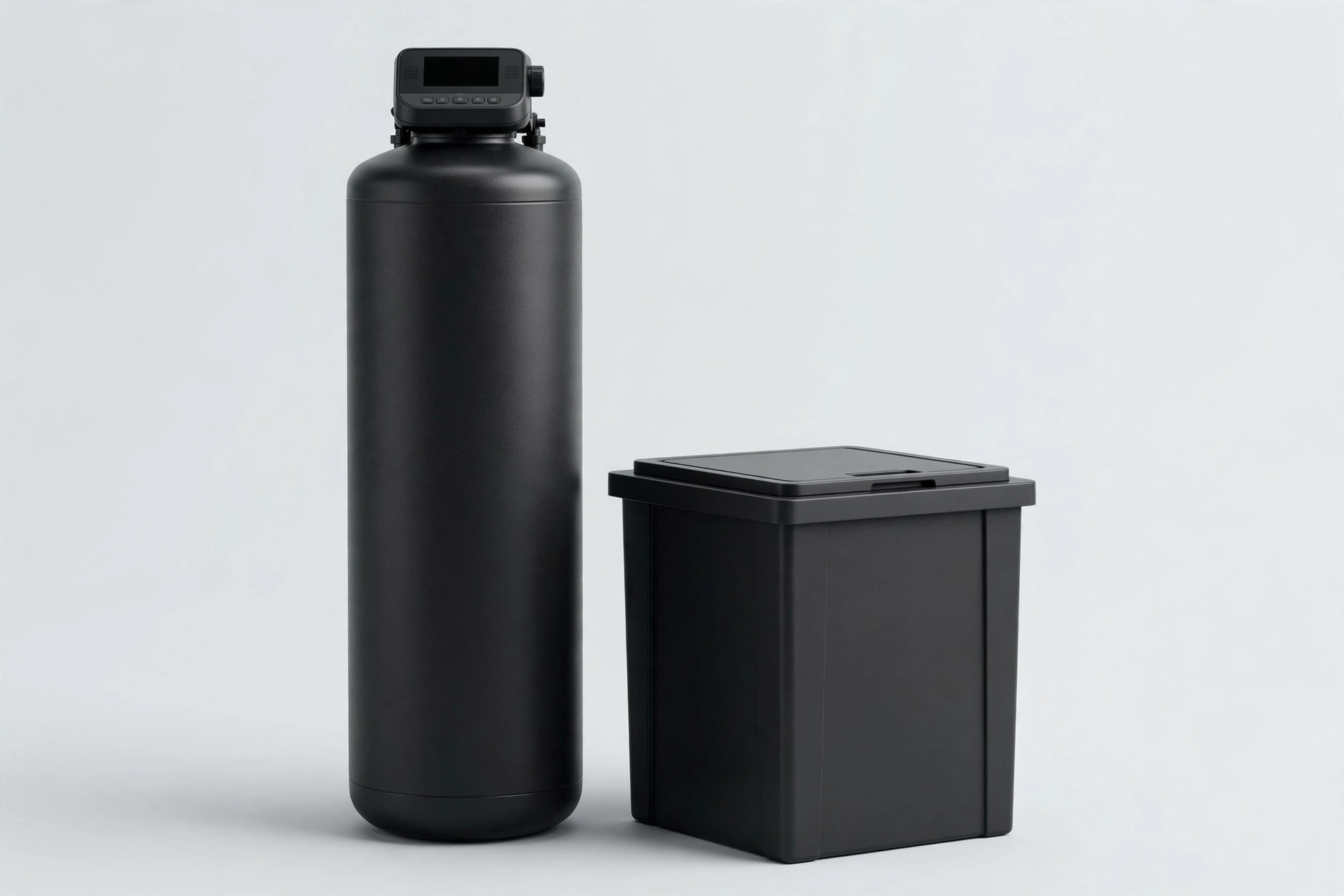
Price: $2,399 (10 GPM) / $2,830 (15 GPM) / $3,294.95 (20 GPM) — Matrixx Whole-Home Filtration + Salt-Based Softener w/ Bluetooth, per uswatersystems.com — Check current price
Mechanism: Ion exchange (salt-based) — actually removes calcium and magnesium
What it does about hardness: Removes it. This is the only category in this guide that produces genuinely soft water.
Satisfaction guarantee: 1 year, per US Water Systems. Warranty terms for the combo systems weren’t published on the product page — verify at purchase.
Verdict: If you want truly soft water — the lather, the spot-free glassware, the skin feel — this is the only honest answer. Ion exchange is the gold standard for hardness removal, full stop.
US Water Systems is the specialist pick here. They build configured softener + carbon-filtration bundles rather than one-size-fits-all boxes, and the Matrixx’s smart valve meters regeneration to actual water use instead of running on a dumb timer (the company claims big salt and water savings from this; we treat those figures as marketing until independently verified). Ion exchange is simple, proven chemistry: resin beads swap hardness minerals for sodium (or potassium, if you prefer), then periodically flush themselves clean with brine.
The tradeoffs are the ones salt softeners have always had. You buy salt regularly, the system needs a drain line and electricity, regeneration uses water, and softened water contains a modest amount of added sodium — the harder your water, the more sodium. (If anyone in the household is on a sodium-restricted diet, talk to their doctor. Potassium chloride works as a regenerant but costs more.) Some municipalities restrict salt-softener brine discharge, so check local rules before buying.
A lower-priced alternative in the same lineup: the Bodyguard filter + Matrixx softener bundle starts at $2,399 (repriced September 2026 — verify the current price at purchase). Size by your home’s flow needs: the 10 GPM unit suits smaller homes; go 15 or 20 GPM for larger ones.
Pros
- Your hardness is high (10+ GPG), you want the actual soft-water feel and spot-free results, and you’re fine with salt purchases and a drain line. This is the right answer for most very-hard-water homes.
Cons
- Your hardness is moderate and scale is the only complaint. You’re buying chores you don’t need.
3. SpringWell CF1 + FutureSoft — Best salt-free conditioner pairing
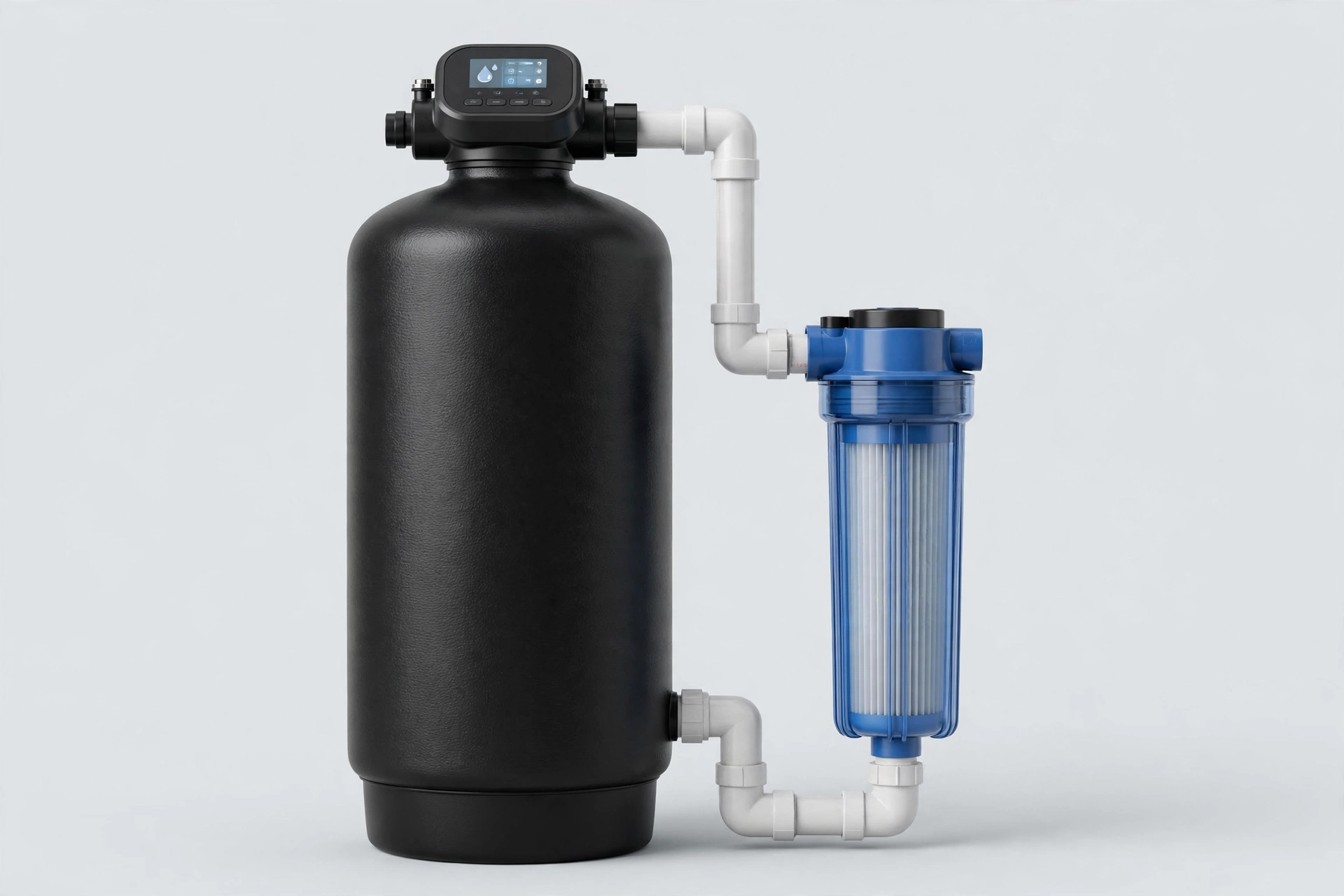
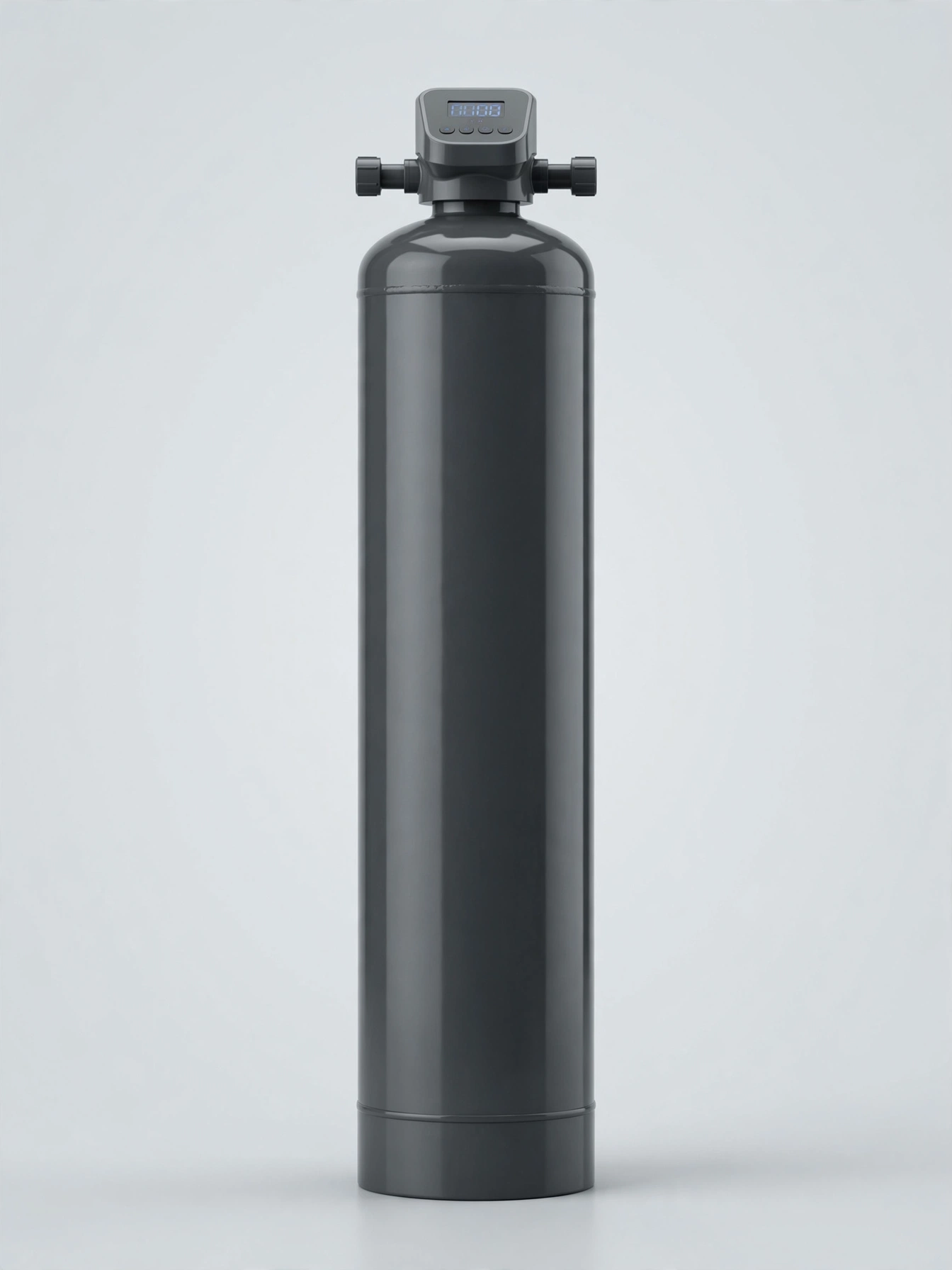
Price: CF1 ~$1,144–$1,165 + FutureSoft ~$1,864 at recent observed sale pricing — roughly $2,900–$3,100 combined after bundle discounts. Both figures are third-party-observed and directional (SpringWell’s exact official prices weren’t publicly readable when we checked). — Check CF1 price · Check FutureSoft price
Flow rate: 9 GPM (CF1, 1–3 bathrooms); up to 20 GPM on the CF+
Filtration: KDF + catalytic coconut-shell carbon, 1,000,000-gallon / 10-year media life, lifetime limited warranty (the CF1 is our top pick for city water in our companion city-water guide)
Conditioning: FutureSoft TAC conditioner — “up to 95%” scale prevention per SpringWell; media life 5+ years; no salt, no regeneration, no drain line, no wastewater; rated for hardness up to 81 GPG
Verdict: Take our top-rated city-water filter and bolt on honest salt-free scale protection. Best of the pairings if you trust the SpringWell platform and want maximum flow-rate headroom.
This is the modular answer. Instead of an all-in-one box, you pair SpringWell’s CF1 carbon system (independently lab-tested per SpringWell, with published third-party results for chlorine, chloramine, and PFAS) with their FutureSoft TAC conditioner for the scale half of the problem. The advantage over the Kind E-3000 is sizing flexibility: the CF line scales to 20 GPM for large homes — and the million-gallon tank media you basically never replace. The only routine cost is cheap sediment pre-filters every 6–9 months.
The same TAC honesty applies: scale prevention, not softening. And it’s two tanks’ worth of space and two purchases to coordinate instead of one box. Note also that we found no system-level NSF certification for SpringWell’s products — the company publishes independent lab results instead.
Pros
- You like the SpringWell platform, have a medium-to-large home that needs the flow rate, and want scale protection without salt.
Cons
- You’d rather have one box and one install. That’s the Kind E-3000’s whole pitch.
4. Aquasana Rhino EQ-1000 + Rhino Salt-Free Water Conditioner — Best mainstream bundle
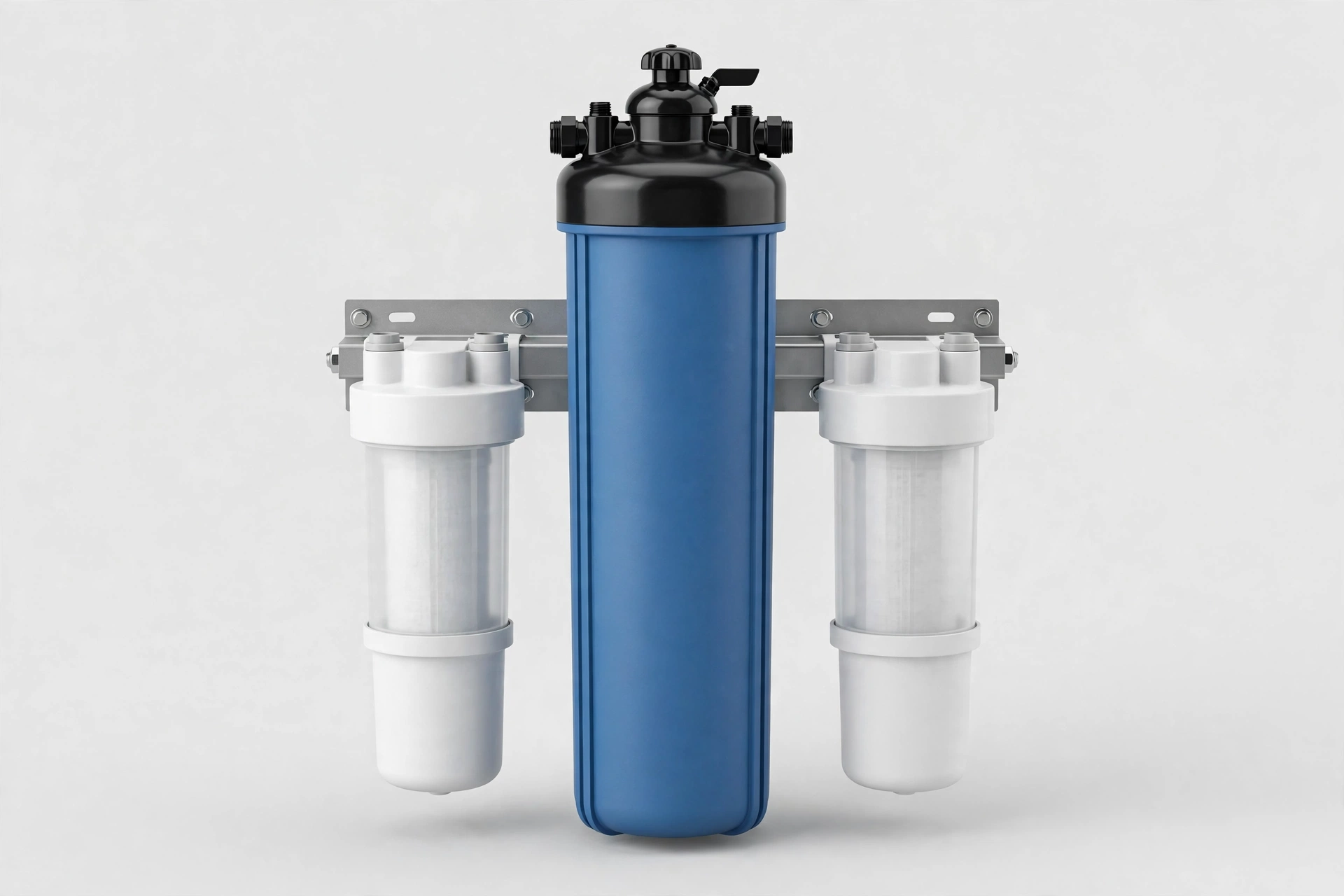
Price: Rhino EQ-1000 ~$1,998 (aquasana.com, observed September 2026 — it was $999 all summer until a mid-September sale ended; Aquasana runs repeated sitewide sales, so check the live price) + Salt-Free Water Conditioner roughly $500–$800 depending on configuration (we could not read a standalone US price on aquasana.com’s pages — third-party-observed only; verify at purchase) — Check Rhino price
Flow rate: 7 GPM rated (up to 2.5 bathrooms / 4 people; larger homes should look at the Rhino Max Flow line)
Filtration: Sediment + KDF + carbon + sub-micron post-filter; independently tested to NSF/ANSI 42 for 97% chlorine reduction, per Aquasana
Conditioning: Rhino Salt-Free Water Conditioner with Scale Control Media (SCM). Per Aquasana’s product description, SCM “uses water flow to reduce hard water minerals from binding and forming scale” — it does not soften water or remove the minerals that cause hardness. Retailer product specs list it for hardness below ~15 GPG, alkalinity under 250 mg/L, pH below 8.3, and iron under 0.3 ppm — check your water against those limits.
⚠️ Watch the “SimplySoft” name — this is the trap. If you’re shopping Aquasana, know this: the current US-market SimplySoft (WH-SF40) is a salt-based ion-exchange softener (dealers list it as IAPMO-certified to NSF/ANSI 44) — it is not a salt-free conditioner. The old salt-free SimplySoft (EQ-SS20) is discontinued. If you want Aquasana’s salt-free option, it’s the Rhino Salt-Free Water Conditioner (SCM). Buying the WH-SF40 expecting salt-free conditioning would be an expensive mistake in the wrong direction.
Verdict: The easiest purchase for brand-trusters — one manufacturer, one order, filtration plus scale conditioning. The catch: at $1,998 the Rhino is no longer the $999 value it was all summer, and this is the most maintenance-heavy of our four picks. The pre-filter wants swapping every 2–3 months (replacement-filter pricing wasn’t published on the pages we read). Over a decade, the maintenance closes the gap with the SpringWell pairing. You can also add Aquasana’s UV purifier in the same purchase — it’s designed as an add-on after filtration (not standalone) and is independently tested to sterilize up to 99.8% of bacteria and nonpathogenic viruses, per Aquasana.
Pros
- You want one mainstream-brand purchase covering filtration and scale, the certification story matters to you, and your household is small-to-medium.
Cons
- You’re buying mainly on value. At $1,998 the Rhino lost the price argument it used to win.
At a glance: the four picks compared
| Kind E-3000 | US Water Systems Matrixx salt bundle | SpringWell CF1 + FutureSoft | Aquasana Rhino + SCM conditioner | |
|---|---|---|---|---|
| Hardness mechanism | TAC (salt-free) | Ion exchange (salt) | TAC (salt-free) | SCM conditioning (salt-free) |
| Price (Sept 2026) | ~$1,885 | $2,399–$3,295 | ~$2,900–$3,100* | ~$2,800* |
| Flow rate | 15 GPM | 10–20 GPM | 9–20 GPM | 7 GPM |
| Removes hardness? | No — prevents scale | Yes | No — prevents scale | No — prevents scale |
| Soft-water feel? | No | Yes | No | No |
| Also filters chlorine/chemicals? | Yes (carbon block) | Yes (carbon stage) | Yes (catalytic carbon) | Yes (carbon + KDF) |
| Salt / drain / electricity | None | Required | None | None |
| Warranty | Limited lifetime | Verify at purchase | Lifetime (limited) | 10-yr limited (reported) |
| Ongoing costs | ~$100/yr filters + ~$800 TAC cartridge every ~5 yrs | Salt ~$50–$180/yr | Sediment pre-filter every 6–9 months | Pre-filter every 2–3 months |
*Third-party-observed pricing: SpringWell’s exact official prices weren’t publicly readable at check time, and Aquasana doesn’t publish a standalone US price for the conditioner. Verify at purchase.
How to choose: the 5-minute hard-water buying guide
1. Get your hardness number first. Under ~7 GPG with scale as the main complaint? Salt-free conditioning is a legitimate answer. Over ~10 GPG, or you want the soft-water feel? You’re in salt-based territory. Don’t let anyone sell you a conditioner for a softener’s job.
2. Decide which problem you’re actually solving. Walk through your house. White crust on fixtures and a dying water heater means a scale problem (a conditioner suffices). Spots on everything, soap that won’t lather, dry skin: you want soft water (ion exchange). Many homes have both. That’s what the combo systems are for.
3. Don’t forget the chlorine half. On city water, you almost certainly have chlorine or chloramine plus hardness. A softener alone won’t fix taste and odor; a carbon filter alone won’t fix scale. Budget for both stages or buy a combo.
4. Size your flow rate. A shower runs ~2.5 GPM, a dishwasher ~2, laundry ~3. Undersizing is the #1 regret in whole-house reviews. It feels like a pressure problem, and it’s miserable. When in doubt, size up.
5. Price the ownership, not just the box. Salt softeners need salt: roughly $50–$180/year for most households (a 40-lb bag every 4–6 weeks at $5–$15 a bag, rising with your hardness). Cartridge systems need cartridges: the Kind’s TAC cartridge runs ~$800 every ~5 years, and that number is what actually moves its 10-year math. Tank-media systems like SpringWell’s need only cheap sediment pre-filters every 6–9 months — the lowest long-term upkeep of the salt-free options.
Frequently asked questions
Will a salt-free system give me soft water?
No. Any product page implying otherwise is using “softener” as marketing language. Salt-free TAC/SCM systems prevent scale; they leave the hardness minerals in the water. Only ion exchange (salt-based, or potassium-based) removes them.
Do I need a water softener if I already have a whole house filter?
A filter and a softener do different jobs. Carbon filters handle chlorine, taste, odor, and chemicals; they do essentially nothing for hardness. If your water is hard and chlorinated, you need both stages.
Is softened water safe to drink?
For most people, yes. Softening adds a modest amount of sodium — the harder your water, the more sodium. Aquasana’s own FAQ notes that drinking water from a sodium-based softener increases daily sodium intake, “which can lead to health problems in sodium-sensitive individuals.” People on sodium-restricted diets should check with their doctor; potassium chloride regenerant is the standard workaround.
Does hard water actually damage my water heater?
Scale buildup can reduce a water heater’s efficiency and shorten its life — this is well documented in plumbing industry literature. How fast depends on your hardness level and water temperature. It’s one of the better financial arguments for treating hard water.
Can I install a softener myself?
Salt-based softeners need a drain line and electrical outlet near the install point, which makes DIY harder than a filter-only install. Handy homeowners do it; most buyers hire a plumber (typically $200–$500 for the plumbing work, depending on your area).
The bottom line
Start with your hardness number. If you want genuinely soft water — the feel, the lather, the spot-free dishes — get a salt-based ion exchange system like the US Water Systems Matrixx bundle ($2,399+ by size). Nothing salt-free does that job. If your hardness is moderate and scale buildup is the real enemy, the Kind E-3000 (~$1,885) is the cleanest one-box answer — just budget for the cartridge replacements — and the SpringWell CF1 + FutureSoft pairing (~$3,000) is the best modular one, with the lowest long-term upkeep of the salt-free options. The Aquasana Rhino + SCM conditioner remains the simplest mainstream-brand purchase, just not the value it was at $999 — and make sure you’re buying the SCM conditioner, not the salt-based SimplySoft. And if you’re on city water, don’t forget the chlorine half of the equation. Hardness treatment and filtration are two different jobs.